
The Convergence Connection: Why Your Client's Hip Flexor Pain Might Be a Vision Problem
Ok, so get this. One of my AMAZING alums called me last week about a client whose right hip flexor and groin pain just wouldn't budge. They had worked the hip, stretched the hip, strengthened the hip, looked at glutes, psoas, adductors, all the usual suspects. But here's where it got interesting: the second she cued her client to tuck her pelvis under, the pain got WORSE. Like somebody turned the volume up.
So I asked her one question: "What does her eye convergence look like?"
There was a pause. Then she said, "Wait… what does that have to do with her hip flexor?"
And THIS is where neuro gets really fun, because maybe more than you'd think.
Why I Wanted Her to Look at the Eyes
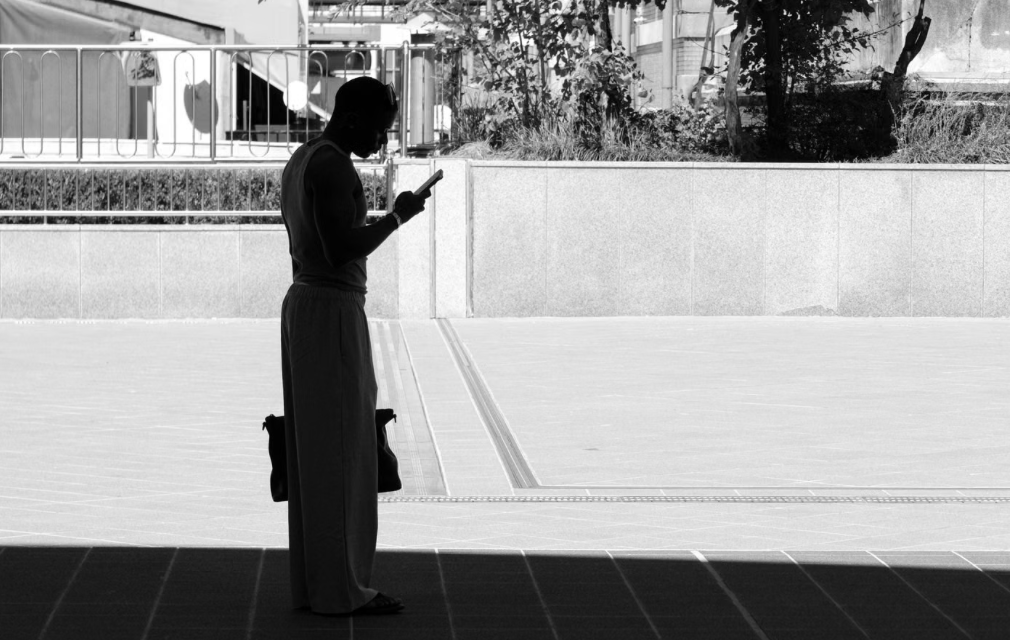
When we look at something close to our face, both eyes turn inward toward the target. That's convergence. If your client spends a huge chunk of the day on a phone, laptop, tablet, charting, scrolling, texting, or doing any kind of close-up work, their visual system spends a LOT of time working at close range.
Now, does that automatically mean their eyeballs caused their hip pain? Nope. But your visual system is a massive source of input into the nervous system, and visual input can influence how the rest of the body organizes itself. So when I have somebody with stubborn pain, weird tension, or a movement that keeps refusing to change, I want to know what other inputs their nervous system might be responding to.
Sometimes, the eyes are part of that conversation.
How to Spot Convergence Issues in Your Client
Start by asking your client where they spend most of their day looking. If the answer is screens for 6-8hours a day, their eyes are spending a LOT of time in convergence, and that's worth checking out.
Then grab a pen (or a coffee stirrer, or your finger, honestly anything they can keep their eyes on) and do a pencil push-up:
Get a baseline first. For this client, that was her pelvic tuck and her pain level, but pick whatever movement or symptom matters for your person.
Hold the pen at arm's length, at eye level, right in front of their nose.
Cue: "Keep your head still and focus on the tip of the pen. Blurry is okay. Tell me the moment it splits into two."
Slowly bring the pen toward the BRIDGE of the nose (not the tip, that's a different test for a different nerve).
The second it doubles, or they hit that "mmm, nope" feeling, that's your cue to bring the pen back out.
Repeat 3-5 times, then retest your baseline.
While they're doing it, here's what I want you watching:
The whites of the eyes. As the pen comes in, both colored parts should travel in toward the nose together. If you see more white on the inner side of one eye, that eye isn't converging as well as the other. I call it looking at the negative space, and once you see it, you can't unsee it.
The break point. Some people double at 10 inches, some can come in super close. Write it down so you can track it over time.
What the body does. Swaying back away from the pen, head creeping, jaw clenching, breath holding, rapid blinking, flushed face. That's the nervous system telling you it doesn't love this.
The most common mistake? Going way too fast or starting way too close. Then your client says "this is easy, this is stupid," and you haven't actually tested anything. Slow it down.
And if your client tells you they HATE reading? Put pencil push-ups at the top of your list. 😉
Now watch what the rest of the body does. Have them focus on your finger close to their face and notice their posture. In a lot of people, you'll see the head drift a little more forward, the shoulders round a bit, and the whole upper body settle into a more collapsed position.
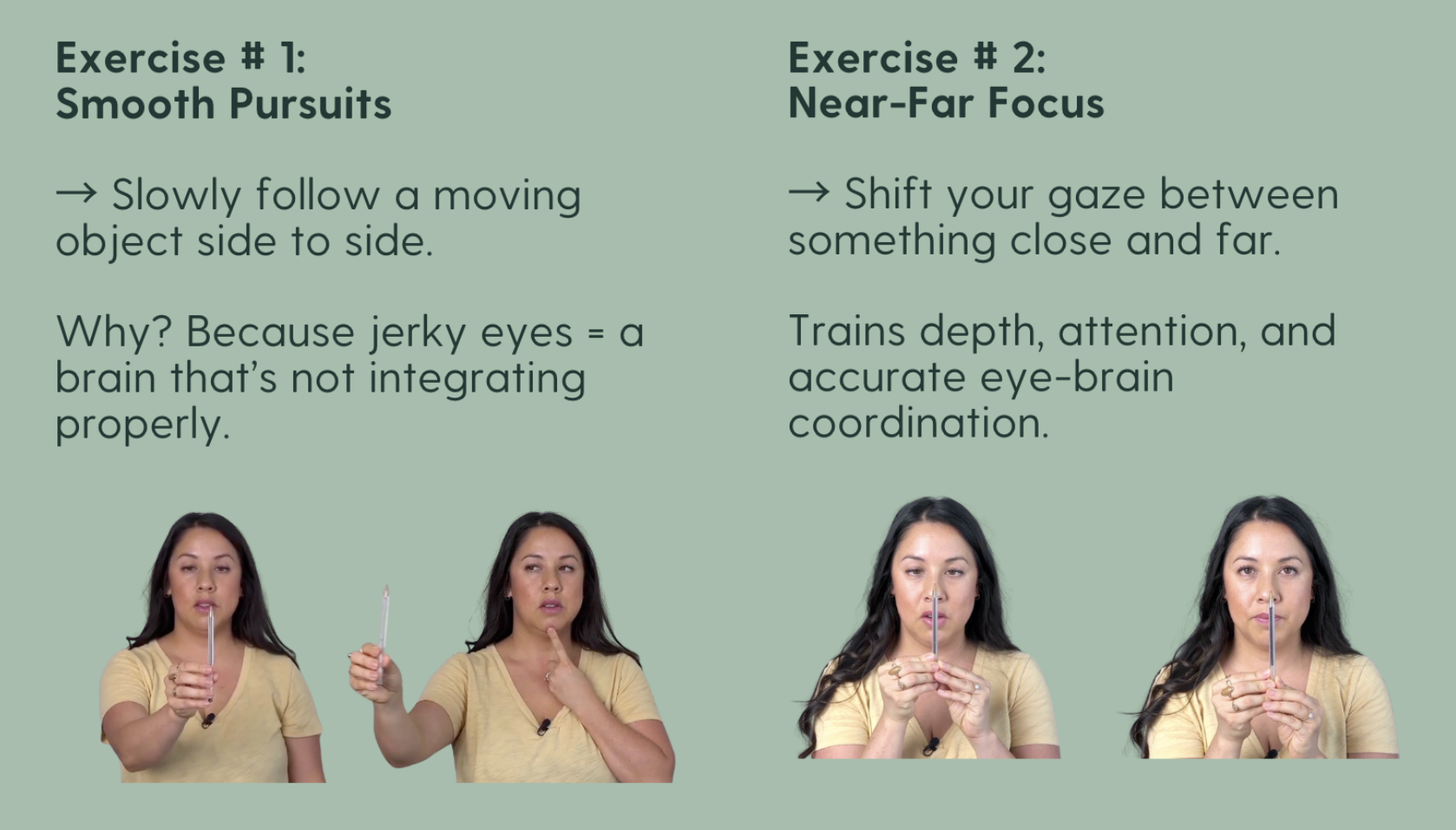
2 more exercises besides pencil push ups you can use. Both smooth pursuits and near-far eye exercises can assist with convergence.
The Convergence-Divergence Reset Protocol
Here's what I had my alum try with her client. It's a simple near-far drill that helps the nervous system remember it doesn't have to stay locked in that close-focus pattern.
Have your client bring the pen in toward the bridge of the nose, just like the pencil push-up, until it starts to split or feel uncomfortable. Then shift their eyes to the farthest target they can see CLEARLY and say "got it" the second it comes into focus. Back to the pen, "got it." That's one rep.
Ideally the far target has no window between them and it (yes, this might mean going outside), but in a small treatment room the top of a bookshelf works great. Do 3-5 reps, slow and intentional, and don't let them switch until the target is actually clear. The "got it" also lets you hear how long each switch takes.
Do this twice daily for 2 weeks. That's it.
Why This Works
Does that prove her convergence was THE cause of her hip pain? Nope. But it tells me her visual system was part of the conversation, and now we have another lever to pull. THAT is how I want you thinking.
Not, “Which exercise fixes hip flexor pain?” but, “What input might this nervous system care about, and what happens when I change it?”
Because sometimes the thing keeping a hip stuck isn’t hiding inside the hip. Sometimes you have to zoom WAY out and look at the entire system. And yes… sometimes that means looking at their freaking eyeballs. 😂
The Real Shift
After my alum reported back, I started paying attention to eye convergence in my own clients with stubborn lower body pain, and I kept seeing it. Hip flexor tension, adductor tightness, pelvic positioning challenges, and a LOT of those clients had eyes that were spending most of their day locked in close focus. When we added convergence work, the lower body often started responding to training again.
One client told me she had no idea her eyes had anything to do with her hip pain, but once she started doing the drill, everything loosened up. Another said it felt like her whole body relaxed, not just her hips.
When the nervous system doesn't feel like it needs that protective pattern anymore, the hip flexors can let go and the pelvis can tuck under without a whole-system protection strategy fighting back.
Why This Matters
Does any of this prove convergence was THE cause of her hip pain? Nope. But it tells me her visual system was part of the conversation, and now we have another lever to pull. THAT is how I want you thinking.
Not, "Which exercise fixes hip flexor pain?" but, "What input might this nervous system care about, and what happens when I change it?"
Because sometimes the thing keeping a hip stuck isn't hiding inside the hip. Sometimes you have to zoom WAY out and look at the entire system. And yes… sometimes that means looking at their freaking eyeballs. 😂
I love you, you got this!
Missy 💙
P.S. Check your own eye convergence this week. Test your pelvic tuck, do the near-far drill, or pencil push ups and retest. Notice what happens to your posture and your hip position. That's the pattern your clients are working against, so it's worth feeling it in your own body first.